张琪悦接受CGTN采访,谈中菲仁爱礁争端与“双轨思路”解决南海争端
张琪悦 来源:CGTN
(张琪悦的视频片段在18分40秒—23分22秒)
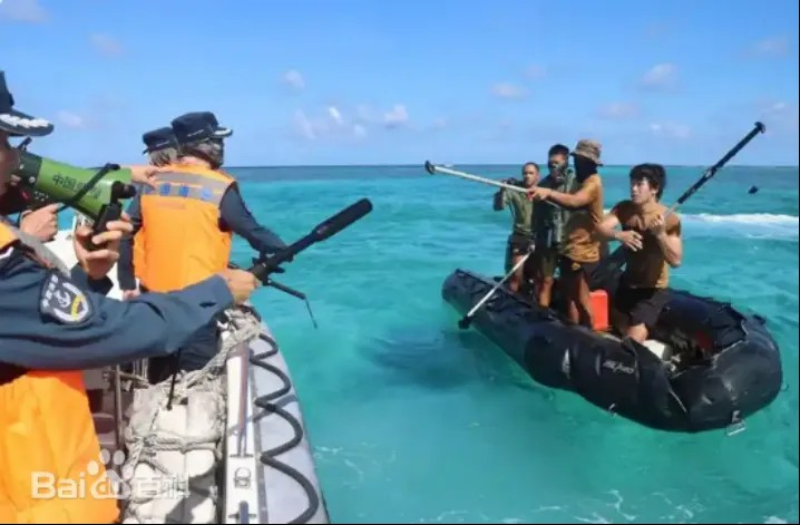
7月22日中午,张琪悦接受中国国际电视台(CGTN)Globla Watch栏目采访,针对7月20日中国海警在仁爱礁附近海域开展正常维权执法活动时,菲方非法“坐滩”军舰故意派出两艘小艇以危险方式抵近、冲撞中方船只,并暴力袭击中方执法人员的事件发表看法。张琪悦还谈及,中方与东盟一直致力于通过“双轨思路”解决南海争端,加快推进“南海行为准则”磋商,希望把南海问题主动权掌握在地区国家手中,排除域外国家负面干预,维护南海地区和平稳定。
主持人提问1:Some Philippine military and police are said to deliberately create maritime trouble to serve outside forces. What's your take on this?
张琪悦回答:
In my view, the recent Philippine maneuvers in the South China Sea are far from isolated incidents. On the surface, they appear aimed at shoring up the illegal “grounding” of that military vessel at Ren’ai Jiao, essentially trying to turn a temporary presence into a permanent, unlawful base. But if you look deeper, the real purpose is to facilitate the strategic agenda of external powers, most notably the United States. This is a clear manifestation of the U.S.-Philippines military alliance and Washington’s broader Indo-Pacific strategy to encircle and contain China from its neighboring seas.
Such actions do grave harm to China’s territorial sovereignty, maritime rights, and national security. More than that, they directly undermine the peace and stability of the South China Sea region as a whole. They also create an unnecessarily negative climate that hampers the implementation of the DOC and slows down the positive progress we have built in the COC consultations.
主持人提问2:
China and ASEAN back the dual-track approach and speed up consultations on the COC. Against current maritime tensions, why is concluding the COC early important? What impact will it bring to South China Sea stability and China-ASEAN ties?
张琪悦回答:
From my perspective, concluding the COC early is absolutely critical, especially in the current tensions.
First, the COC is the most effective tool we have for crisis management, confidence-building and promoting practical cooperation between China and ASEAN members. It would establish an effective and binding framework to prevent incidents at sea, such as the recent Ren’ai Jiao incidents, to manage crisis and facilitate practical cooperation in areas like marine environmental protection, search and rescue, and fisheries management.
Crucially, the entire negotiation of COC excludes external powers, particularly the United States. It also sends a powerful signal: China and ASEAN are fully capable of resolving our own maritime disputes on our own. This is exactly the spirit of the dual-track approach, that is the sovereignty issues are settled bilaterally, while regional peace and stability are upheld by China and ASEAN states collectively.
We have already completed the third reading of the COC, and both sides are aiming to reach, or at least make major progress by 2026. In order to reach this aim, we need to bridge differences on the geographical scope of the COC, its legal force and binding effect, and the dispute settlement mechanism for its interpretation and application. These have been sticking points since the very beginning of consultations since 1992, so overcoming them would be a true breakthrough.
The conclusion of COC would significantly reduce the risk of on-site confrontations, enhance maritime emergency response, and transform the South China Sea into a sea of peace, cooperation, and friendship. And I firmly believe that China could play the role of positive leading power in present negotiation and future implementation of COC. This will also be the surest path to lasting stability and a stronger, more resilient China-ASEAN partnership.
This is my understanding. Thank you!