The Ninth International Workshop on Building Regional Security Architecture in the Asia-Pacific Convened in Shanghai
2026/07/09
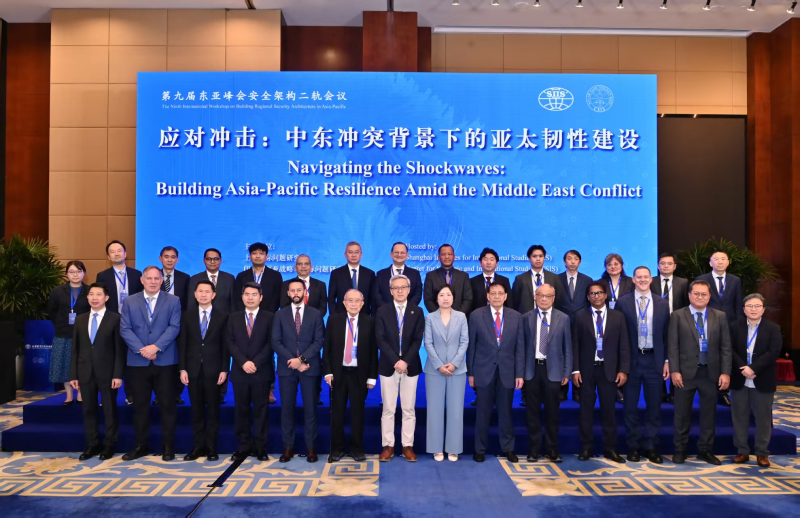
On July 7, 2026, under the guidance and support of the Department of Asian Affairs of the Ministry of Foreign Affairs of the People's Republic of China, the Shanghai Institutes for International Studies (SIIS), in collaboration with the Centre for Strategic and International Studies (CSIS), Indonesia, convened the Ninth International Workshop on Building Regional Security Architecture in the Asia-Pacific in Shanghai. The theme of this year's workshop was “Navigating the Shockwaves: Building Asia-Pacific Resilience Amid the Middle East Conflict.” More than 30 scholars and experts from 15 countries and international organizations, including the ASEAN Secretariat, Australia, Brunei, Cambodia, Canada, China, India, Indonesia, Japan, Laos, Malaysia, Myanmar, the Philippines, the Republic of Korea, Singapore, and Thailand, participated in the discussions.
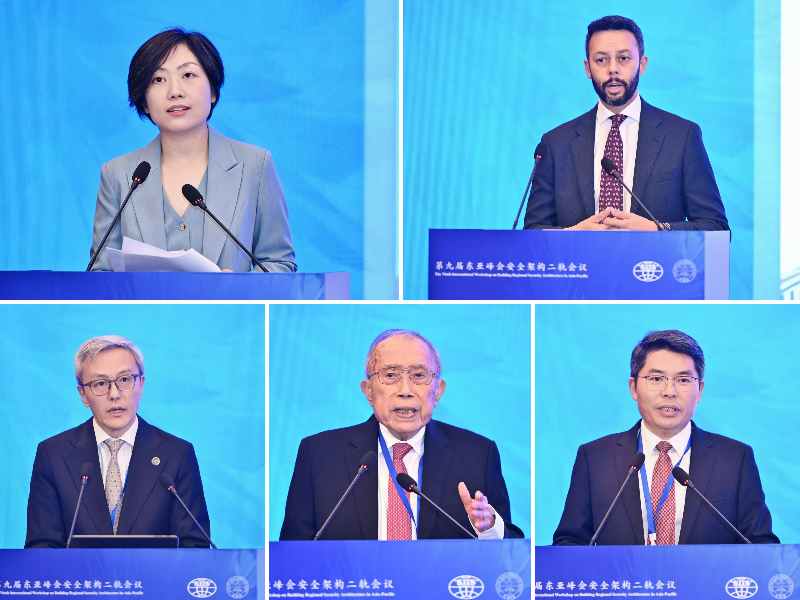
The opening ceremony was moderated by Li Kaisheng, Vice President of SIIS. Opening remarks were delivered by Fang Xiao, Deputy Director-General of the Foreign Affairs Office of the Shanghai Municipal People's Government; Garry Ramlee Ibrahim, Director of the Political and Security Directorate of the ASEAN Secretariat; Chen Dongxiao, President of SIIS; and Jusuf Wanandi, Vice Chair of the Board of Trustees of the CSIS Foundation, Indonesia. Against the backdrop of the profound and far-reaching impact of the Middle East conflict on both the global landscape and the Asia-Pacific region, the speakers expressed the hope that the workshop would contribute to strengthening interregional cooperation in both traditional and emerging areas, promote peace and development through constructive and innovative approaches, provide greater certainty for the orderly evolution of the regional architecture, and offer policy insights and practical tools to address growing risks and challenges.
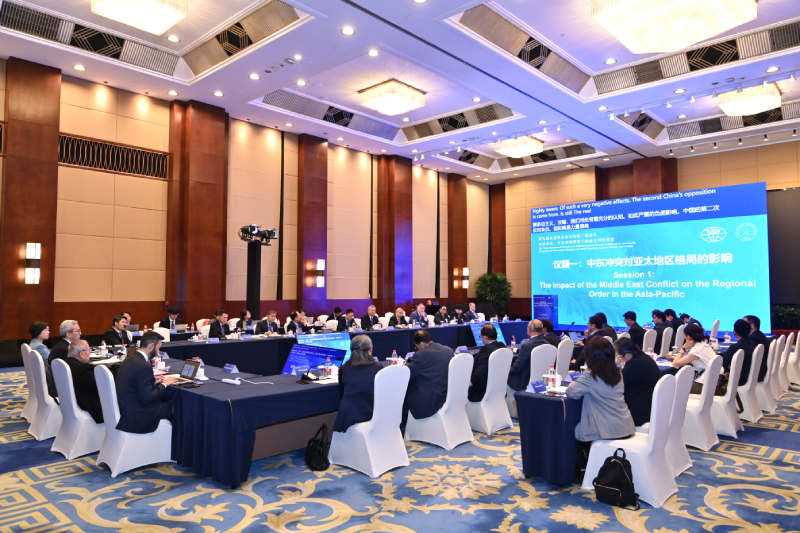
The participants engaged in in-depth discussions under four thematic sessions, jointly assessing the impact of the Middle East conflict on global developments, particularly on the security and economic environment of the Asia-Pacific, exploring effective policy responses by regional countries, and examining future pathways for the evolution of the Asia-Pacific security architecture and regional resilience-building.
During the first session, Hassan Wirajuda, Member of the Board of Trustees of the CSIS Foundation, Indonesia; Shahriman Lockman, Director of Special Projects at the Institute of Strategic and International Studies (ISIS) Malaysia; Zhu Feng, Dean of the School of International Studies at Nanjing University; and Happymon Jacob, Founder and Director of the Council for Strategic and Defense Research (CSDR), India, discussed the implications of the Middle East conflict for the regional environment, major-power competition, and ASEAN centrality. Participants observed that both the Middle East conflict and the strategic adjustments associated with the second Trump administration are accelerating transformations in the Asia-Pacific order. Countries across the region are seeking new strategic positions while striving to preserve strategic autonomy and safeguard national interests. The session was chaired by Wu Chunsi, Director of the Center for American Studies at SIIS.
In the second session, Thitinan Pongsudhirak of the Institute of Security and International Studies, Thailand; Tang Siew Mun of the ISEAS – Yusof Ishak Institute, Singapore; Chung Jae-heung of the Sejong Institute, Republic of Korea; and Liu Peng of Yunnan University examined the impact of the Middle East conflict on regional security dynamics and key Asia-Pacific security issues. Participants agreed that the conflict has accelerated changes in the regional security architecture, while non-traditional security concerns such as energy and food security have become increasingly salient. They emphasized that coordinated regional action is essential to effectively manage growing uncertainties and ensure sustainable regional security. The session was chaired by Zhao Long, Director of the Institute for Global Strategic and Security Studies at SIIS.
The third session featured presentations by Yose Rizal Damuri, Executive Director of CSIS Indonesia; Kimlong Chheng, President of the Asian Vision Institute, Cambodia; Hazwan Haini of the Centre for Strategic and Policy Studies, Brunei; Henelito A. Sevilla Jr., Professor at the Asian Center of the University of the Philippines; Kikuchi Yona of the Japan Forum on International Relations; and Xue Lei, Research Fellow at the Institute for World Economy Studies of SIIS. Discussions focused on the impact of the Middle East conflict on the regional economy and economic integration in the Asia-Pacific. Participants highlighted that the economic risks generated by the conflict are global in scope, with the Asia-Pacific bearing a particularly significant burden. They stressed the importance of maintaining and strengthening existing economic cooperation mechanisms, expanding trade, investment, and financial cooperation, and enhancing the foundations for long-term regional economic resilience. The session was chaired by Xue Chen, Research Fellow at the Center for Southeast Asian Studies of SIIS.
The fourth session brought together Rizal Sukma, Senior Fellow of CSIS Indonesia; Philippe Rheault, Director of the China Institute at the University of Alberta, Canada; Soe Thu Ra, Deputy Director of the Myanmar Institute of Strategic and International Studies; Soulathin Thiladej, Director of Strategic Research and International Studies at the Institute of Foreign Affairs, Laos; James Laurenceson, Director of the Australia-China Relations Institute at the University of Technology Sydney; and Chen Hong, Professor at East China Normal University. Participants exchanged views on the future direction of the Asia-Pacific regional architecture, evaluated its capacity to address emerging risks and challenges, and discussed policy options for building a more resilient region. They emphasized that resilience must be grounded in collaborative innovation and coordinated action, particularly through strengthening connectivity among bilateral, regional, and multilateral economic mechanisms. The session was chaired by Zhou Shixin, Director of the Center for Southeast Asian Studies at SIIS.
At the closing session, Jusuf Wanandi and Li Kaisheng delivered concluding remarks. They underscored the importance of solidarity and cohesion in regional cooperation and called on all countries to shoulder their responsibilities in promoting peace and prosperity. They stressed that only through sustained cooperation can regional countries strengthen their resilience against diverse risks and challenges, build a stable and constructive regional security and economic architecture, and effectively mitigate strategic pressures arising from both the Middle East conflict and major-power coercion. Such efforts, they noted, would help foster a more inclusive and forward-looking strategic environment for advancing the Asia-Pacific Community vision under the framework of APEC 2026.
The Workshop on Building Regional Security Architecture in the Asia-Pacific was launched by SIIS in 2017. Since then, it has brought together scholars and experts from East Asia Summit member countries to discuss the evolution, direction, and characteristics of the regional security architecture. Eight previous workshops have been successfully held in both online and in-person formats.