“Shanghai Nanjing Plus” 2025: “Exploring Perspectives on China–U.S. Relations” Series: Roundtable Meeting at SIIS
2025/10/12
On the morning of October 11, 2025, the delegation from the “Shanghai Nanjing Plus” 2025: “Exploring Perspectives on China–U.S. Relations” program—co-organized by the Shanghai Institutes for International Studies (SIIS) and the Nanjing University–Johns Hopkins University Center for Chinese and American Studies (NHC)—joined a roundtable discussion titled “Technology Innovation on the Shifting Economic and Policy Landscape,” hosted by SIIS.
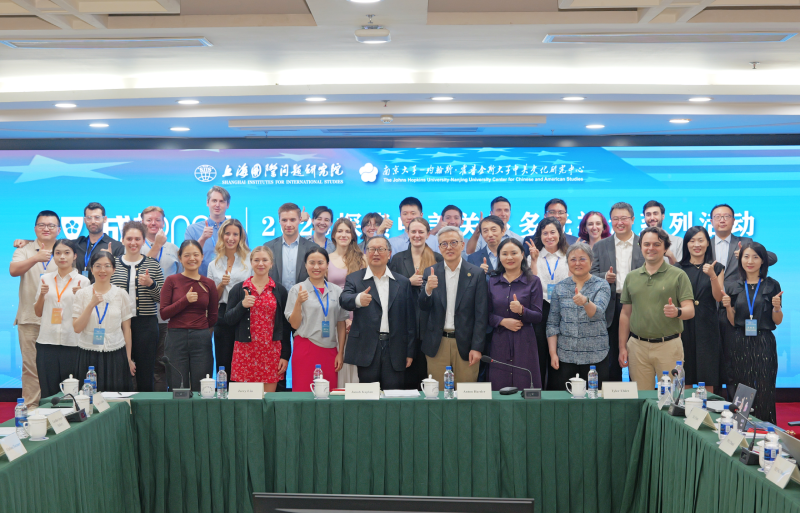
Group Photo
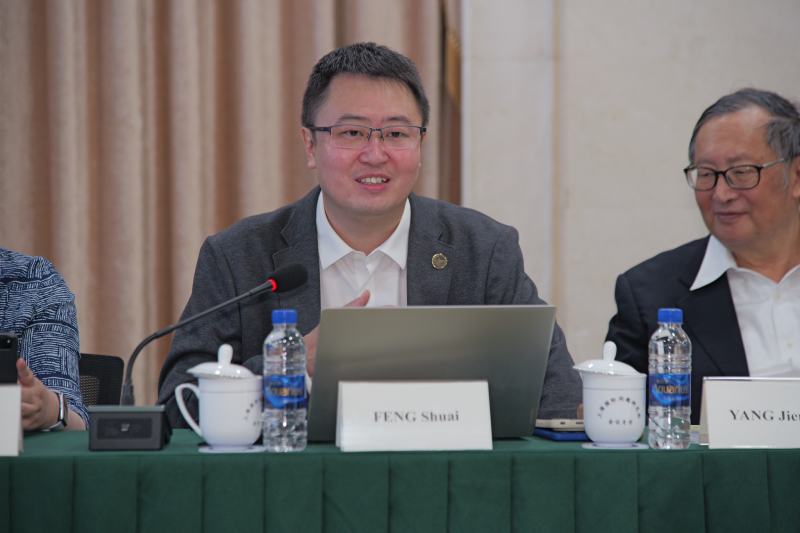
Chen Dongxiao, President of SIIS, attended the meeting and gave the welcome and opening remarks. Yang Jiemian, Chairman of SIIS Academic Advisory Council, delivered the keynote speech. The session was moderated by Feng Shuai, Deputy Director of SIIS’s Institute for International Strategy and Security Studies. The roundtable also featured guests from institutions including the Nanjing University–Johns Hopkins University Center for Chinese and American Studies, the Center for American Studies at Fudan University, and the Global Alliance on Artificial Intelligence for Industry and Manufacturing Center of Excellence under the United Nations Industrial Development Organization (UNIDO). Together with the visiting delegation, they dived into an in-depth and lively discussion on how young people in China and the United States view innovation-driven development and the prospects for bilateral cooperation in the field of technological innovation.
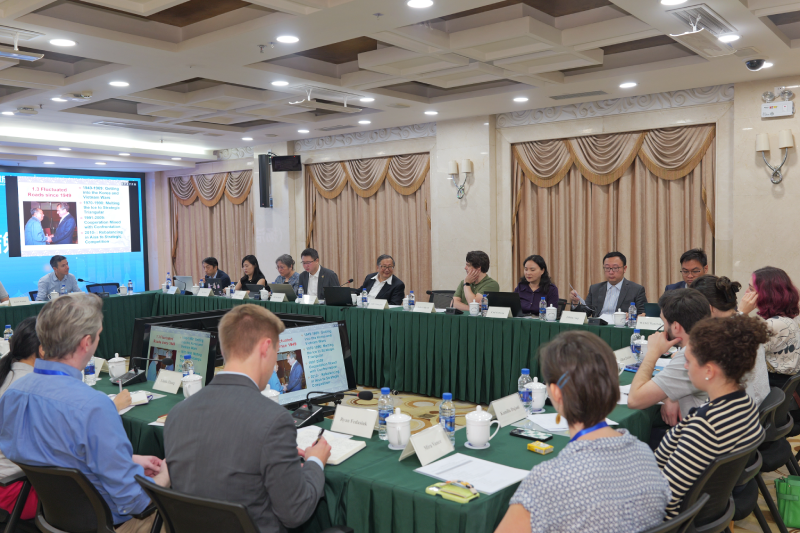
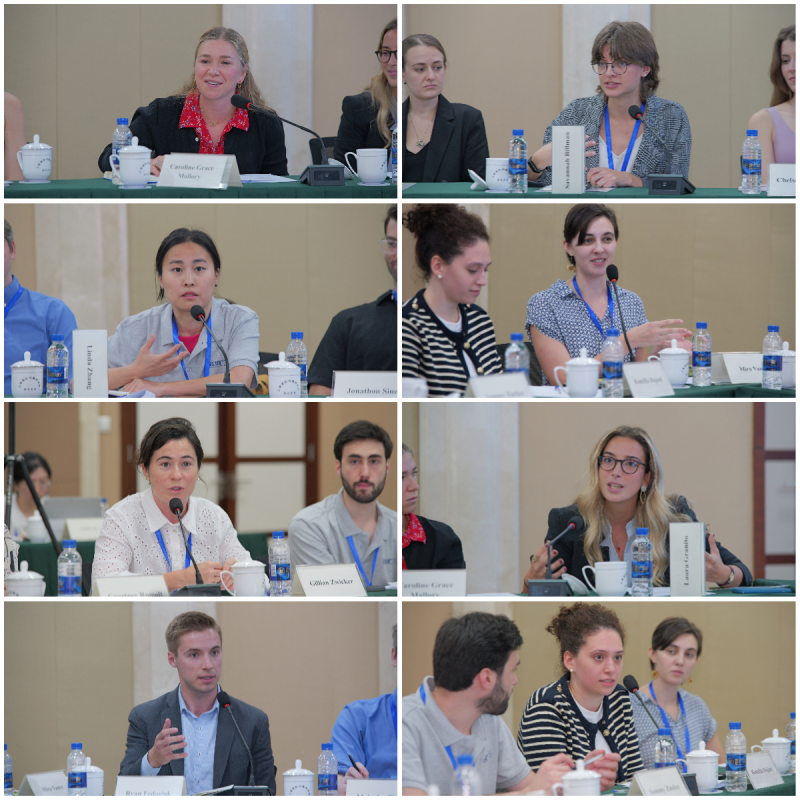
Photo from the Event
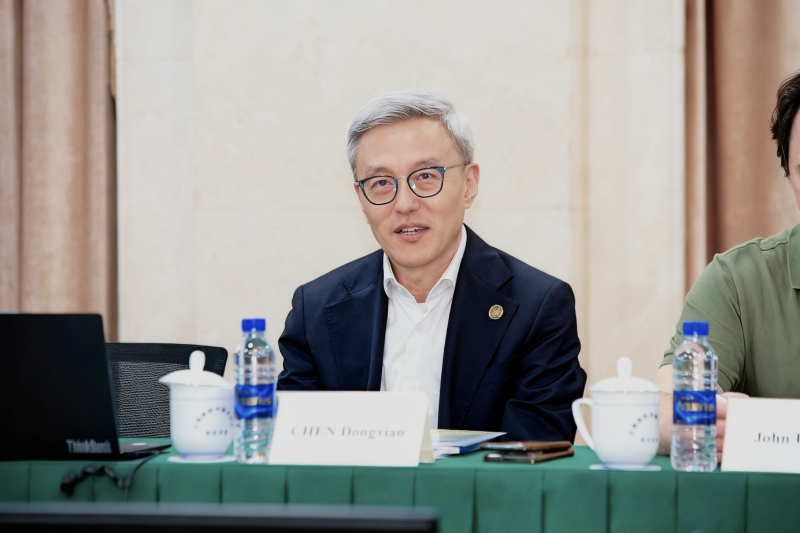
Before the meeting kicked off, President Chen Dongxiao had a warm conversation with the “Shanghai Nanjing Plus” 2025 delegation, taking time to hear their impressions of the program. In his welcome and opening remarks, he began by outlining SIIS’s growth. Founded in 1960, he explained, SIIS has long provided intellectual backing for China’s foreign policy and global engagement, while prioritizing academic exchanges and partnerships worldwide. He described SIIS’s mission as blending the roles of a “think tank” and a “do tank” and serving as a platform for dialogue. Notably, several delegation members hail from U.S. think tanks and institutions that have enjoyed long-standing ties with SIIS. Over the years, these partners have collaborated on joint research spanning critical areas of China-U.S. relations—from global strategic stability and the international order to the Taiwan issue and reforms in global governance across finance, trade, and sustainable development.He also urged greater attention to technology’s role in shaping China–U.S. relations, highlighting how breakthroughs in AI, digital tools, and other disruptive fields are profoundly reshaping the structure, dynamics, and trajectory of the bilateral relationship. Wrapping up, he expressed hope that, in an era defined by “competition and governance,” the day’s discussions would be thought-provoking, substantive, and constructive—helping chart practical paths toward peaceful coexistence and mutually beneficial cooperation between China and the United States.
Chen Dongxiao, President of the Shanghai Institutes for International Studies, Delivers Remarks.
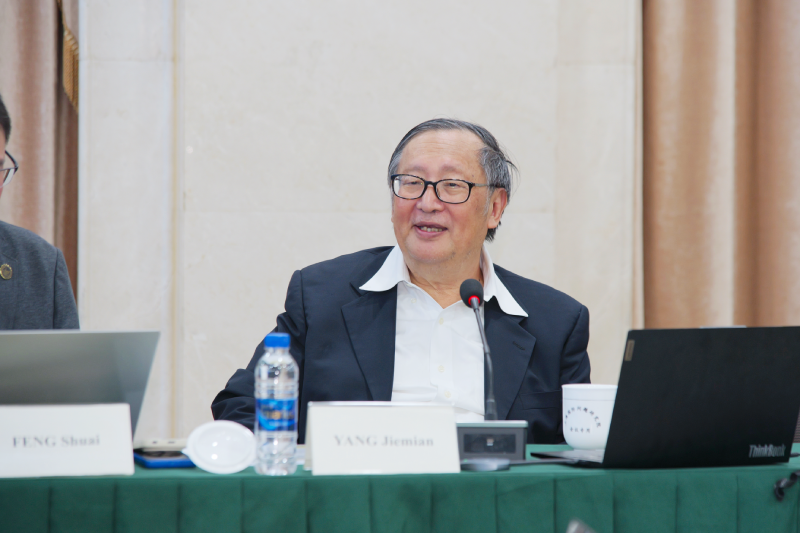
Next up, Chairman Yang Jiemian took the stage with his keynote, “Boomers to Gen Z on China-U.S. Relations Trajectory: Professional Preparation and Career Development.” His address focused on three main aspects.
He kicked off with a sweeping review of the evolution of China–U.S. relations. It all started back in 1784 with the Empress of China, the first American merchant ship to sail straight to China for trade. From there, he walked through the two countries teaming up against fascism in World War II, then the roller-coaster decades after 1949, painting a clear arc of where the relationship has been and how it got here.
Second, he opened up about his own deep dive into studying the United States. Back in the 1980s as a grad student, he he hopped on Greyhound buses from Massachusetts, rolled through Michigan, and kept going all the way to Montana—a true cross-country adventure. At this point, he turned to the “Shanghai Nanjing Plus” 2025 delegation and asked if they had ever ridden a Greyhound bus themselves. The room instantly lit up with laughter and nods.
Finally, he turned to the future: career paths and personal growth in a fast-changing world. He urged everyone to stay proactive and adaptable. Sprinkling in wisdom from Rousseau, Einstein, and Lu Xun, he wove together Eastern and Western perspectives with decades of his own research and real-world experience, sharing heartfelt insights on life, learning, and building a meaningful career.
Yang Jiemian, Chairman of SIIS Academic Advisory Council, Delivered a Keynote Speech
Feng Shuai, Deputy Director of SIIS’s Institute for International Strategy and Security Studies, Hosts the Event
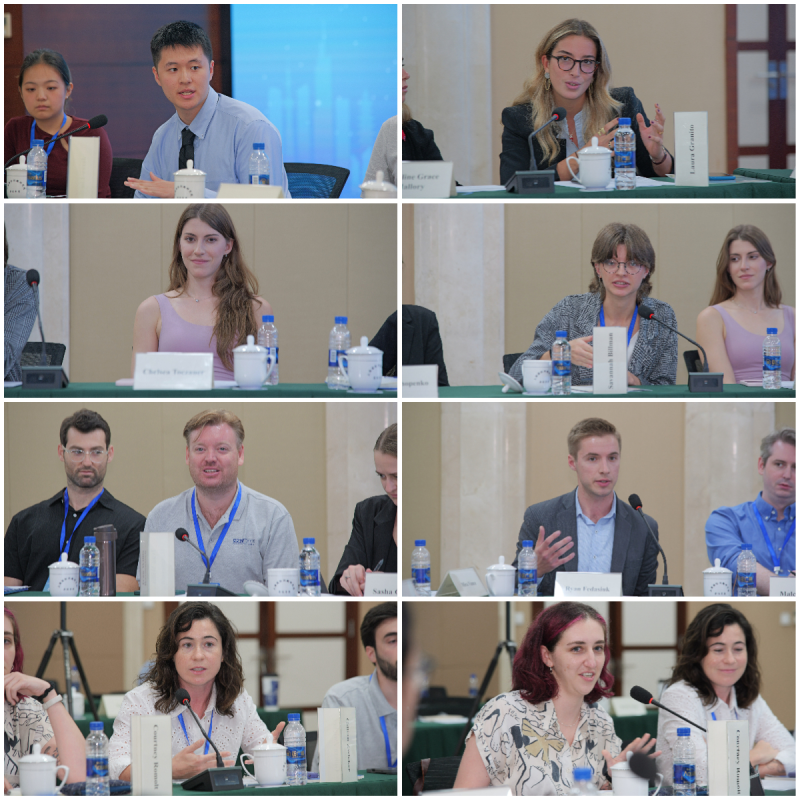
After the keynote, the members of the “Shanghai Nanjing Plus” 2025 delegation thanked Chairman Yang Jiemian and jumped in with questions on everything from China–U.S. relations and international educational exchange to climate change and artificial intelligence. The discussion was lively and wide-ranging, clearly showing the group’s keen interest and genuine passion for digging into the big issues shaping ties between the two countries.
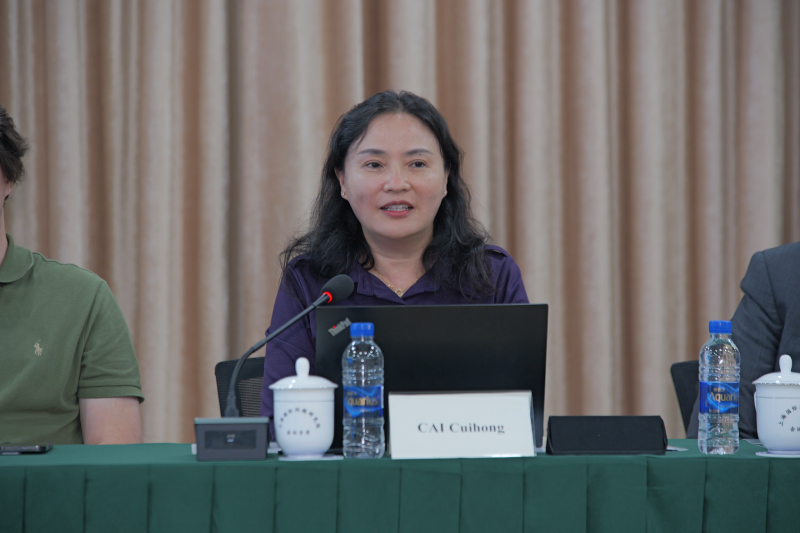
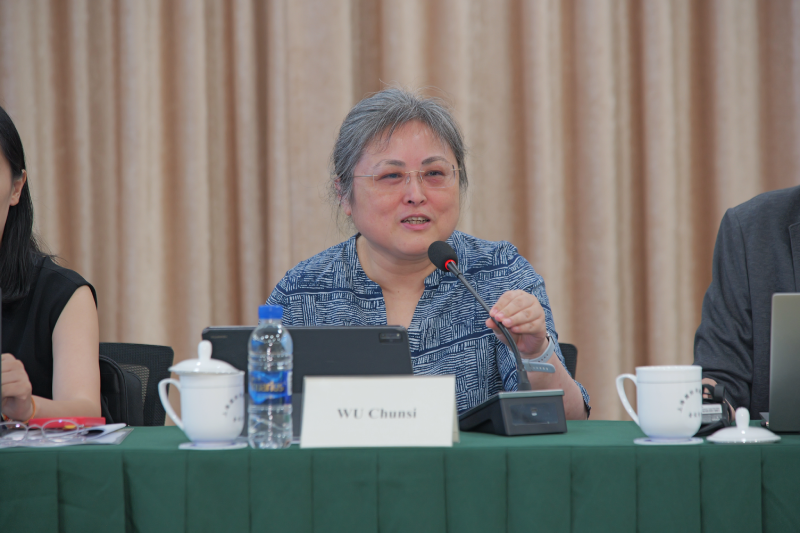
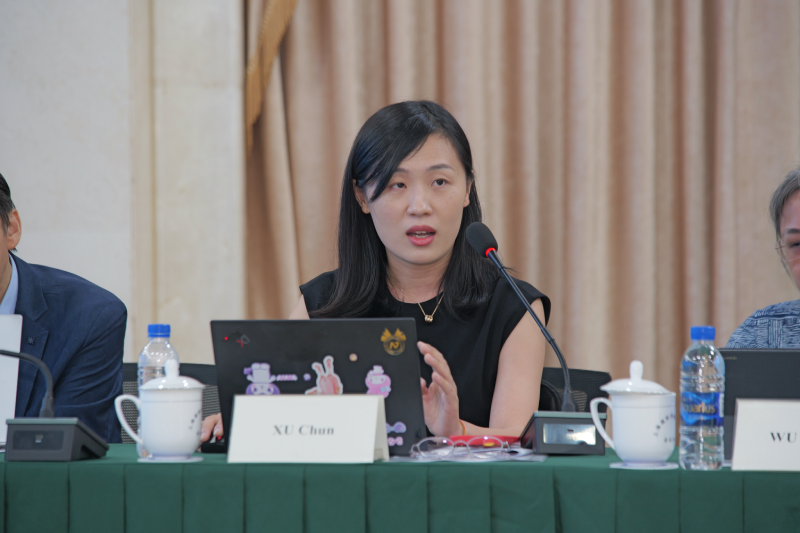
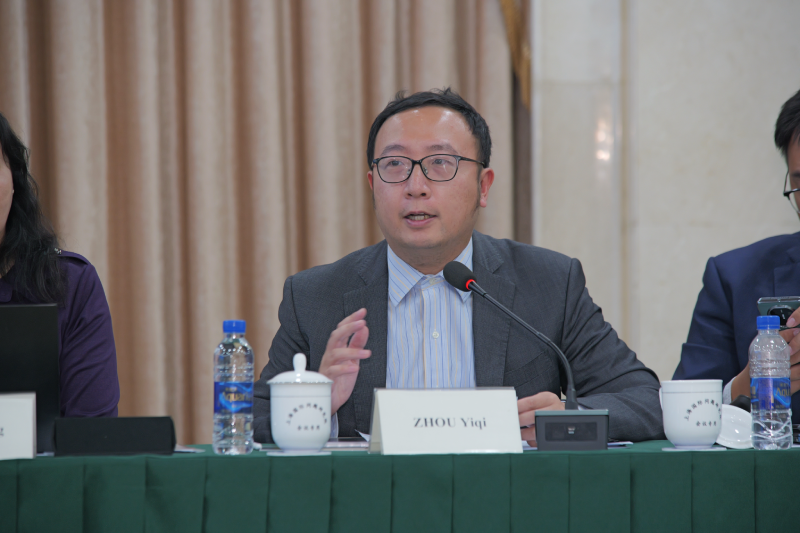
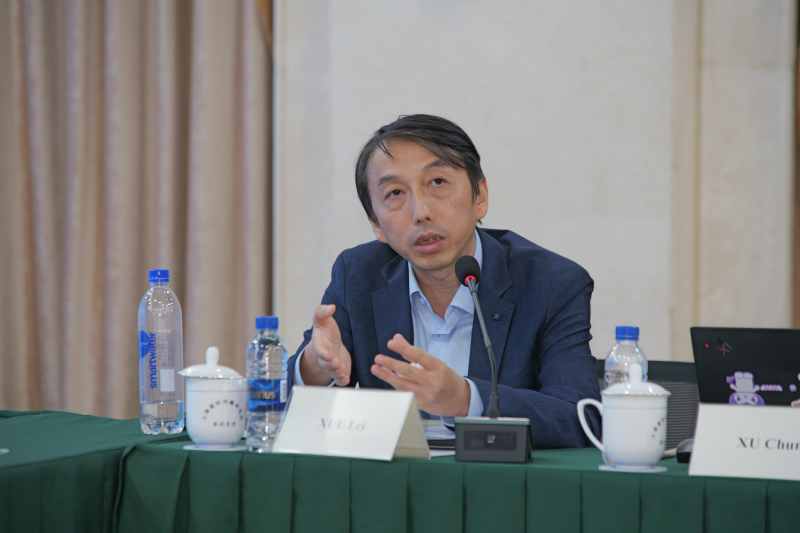
Once the open Q&A wrapped up, a lineup of experts shared their takes on the theme “Economic and Political Impacts of Technological Innovation & Its Role in China–U.S. Relations.” They included Cai Cuihong, a professor at Fudan University’s Center for American Studies, Wu Chunsi, Senior Fellow and Director of the Center for American Studies at SIIS, Xu Chun, Secretary-General of UNIDO Global Alliance on Artificial Intelligence for Industry and Manufacturing Center of Excellence, Zhou Yiqi, Senior Fellow at SIIS’s Institute of Public Policy and Innovation, and Xue Lei, Research Fellow at SIIS’s Institute for World Economy Studies. Tapping into their expertise, each one broke down the topic from a unique angle, delivering a rich mix of professional perspectives.
Cai Cuihong, Professor of Fudan University’s Center for American Studies, Delivers a Speech
Wu Chunsi, Senior Fellow and Director of the Center for American Studies at SIIS, Delivers a Speech
Xu Chun, Secretary-General of UNIDO Global Alliance on Artificial Intelligence for Industry and Manufacturing Center of Excellence, Delivers a Speech
Zhou Yiqi, Senior Fellow from SIIS’s Institute of Public Policy and Innovation, Delivers a Speech
Xue Lei, Research Fellow from SIIS’s Institute for World Economy Studies, Delivers a Speech
Following the experts’ speeches, members of the “Shanghai Nanjing Plus” 2025 delegation engagedjumped into another Q&A session with the five expertpanelists, on covering topics including China–U.S. relations, China–U.S.–Europe trilateral interactions, semiconductor industry development, AI governance, and climate change responsesaction, further deepening their understanding and communication on these subjects.
The roundtable meeting wrapped up on a high noteconcluded amid lively and in-depth discussions, buzzing with sharp, thoughtful discussion. Delegation members they walked away with a ton of fresh insight and thanked SIIS warmly for putting together such a well-run event. generally expressed that they gained substantial insights from the exchange and conveyed their sincere appreciation to SIIS for the careful organization and arrangement.