“Shanghai Nanjing Plus” 2025: “Exploring Perspectives on China–U.S. Relations” Series: Opening Ceremony
2025/10/10
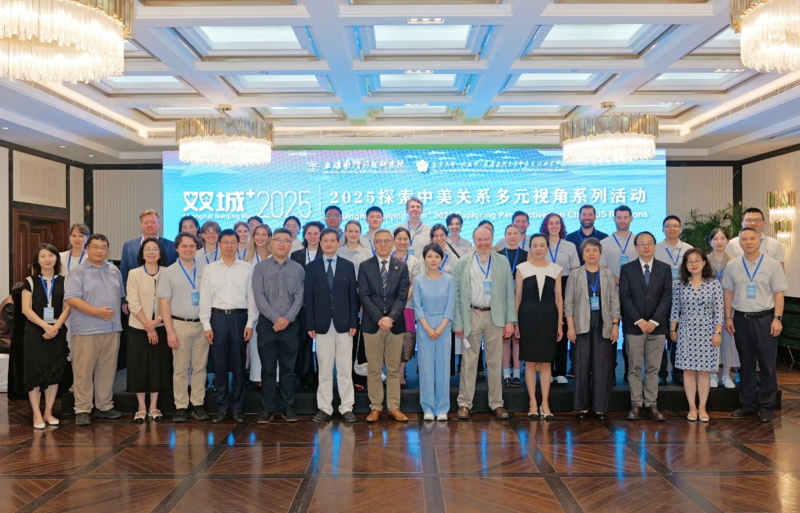
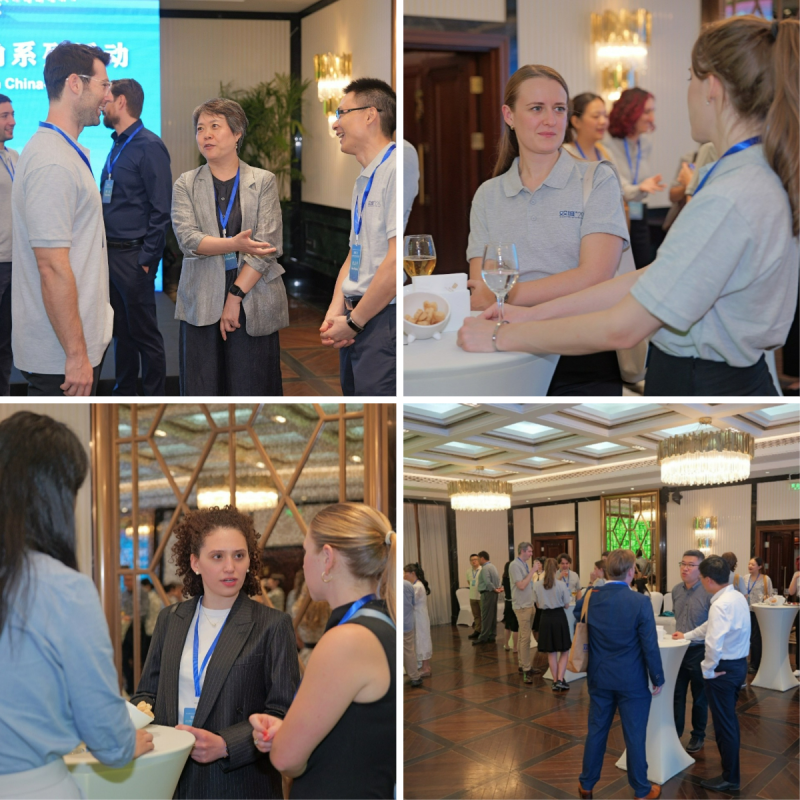
On October 9, 2025, the opening ceremony of the “Shanghai Nanjing Plus” 2025: “Exploring Perspectives on China–U.S. Relations” program, co-organized by the Shanghai Institutes for International Studies and the Nanjing University–Johns Hopkins University Center for Chinese and American Studies, was held at the Jin Jiang Hotel in Shanghai.
Opening Ceremony
The opening ceremony was moderated by Li Xiaorong, Chinese Co-Director of the Nanjing University–Johns Hopkins University Center for Chinese and American Studies. Ma Yinghui, Director General of Shanghai Municipal Foreign Affairs Office, attended the opening ceremony and delivered an address. Chen Dongxiao, President of the Shanghai Institutes for International Studies, and Adam Webb, American Co-Director of the Nanjing University–Johns Hopkins University Center for Chinese and American Studies, attended as representatives of the host institutions and delivered remarks respectively. Other distinguished guests included Luo Jie, Level II Bureau Rank Official of the General Office of the Standing Committee of the Shanghai Municipal People’s Congress and Deputy Director of the Office of its Foreign Affairs Committee, and Yu Xuemei, Vice President of Shanghai University, etc.
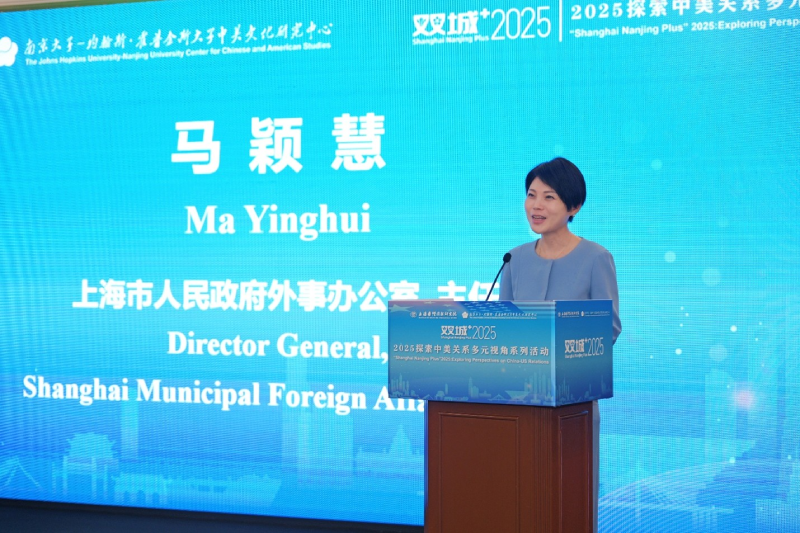
Ma Yinghui, Director General of Shanghai Municipal Foreign Affairs Office
In her address, Ma Yinghui, Director General of Shanghai Municipal Foreign Affairs Office, stated that more than fifty years ago, the signing of the Shanghai Communiqué at the Jin Jiang Hotel marked a pivotal turning point in China–U.S. relations. Holding the opening ceremony of the “Shanghai Nanjing Plus” 2025 program at this historic venue reaffirms the enduring value importance of dialogue and mutual understanding in advancing China–U.S. relationbilateral ties. The theme of this year’s theme program–“Technology Innovation on the Shifting Economic and Policy Landscape,” closely aligns withresonates Shanghai’s priorities to become five global centersof becoming five international centers: international hubs for economicy, financiale, trade, shipping, and science and technology innovation centers. Innovation, she emphasizstressed, is the key driving force behind Shanghai’s progress towardpursuit of these “Five Centers.” Ma introduced Shanghai to the delegation through the three “I”s–International, Innovative, and Inclusive–and expressed her firm belief that the exchanges in the coming days would go beyond sharing experiences, fostering mutual trust and lasting friendship among young people from both countries. She concluded by wishing the “Shanghai Nanjing Plus” 2025 program great success.
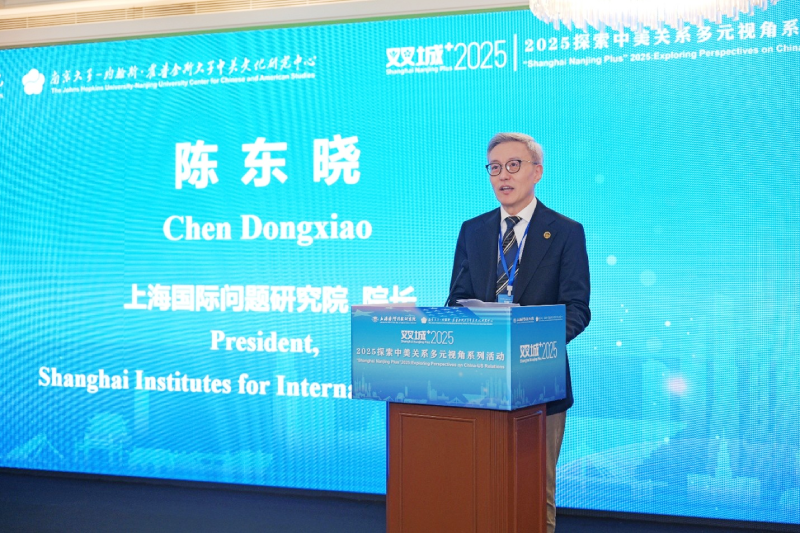
Chen Dongxiao, President of the Shanghai Institutes for International Studies
President Chen Dongxiao warmly welcomed all members of the “Shanghai Nanjing Plus” 2025 delegation. He recalled that the program originated in early 2023 from discussions with Adam Webb, American Co-Director of the Nanjing University–Johns Hopkins University Center for Chinese and American Studies. . Together, they explored ways to foster meaningful exchanges between young people from China and the United States, arriving at two core principles: genuine, in-depth face-to-face dialogue and multidimensional perspectives. Over the past two years, the program has achieved remarkable progress, with notable results in three main areas: immersive experiences, real-time and meaningful dialogue, and diverse interactions among participants from varied backgrounds. In closing, he extended his best wishes for all participants to have a rewarding and enjoyable journey in China.
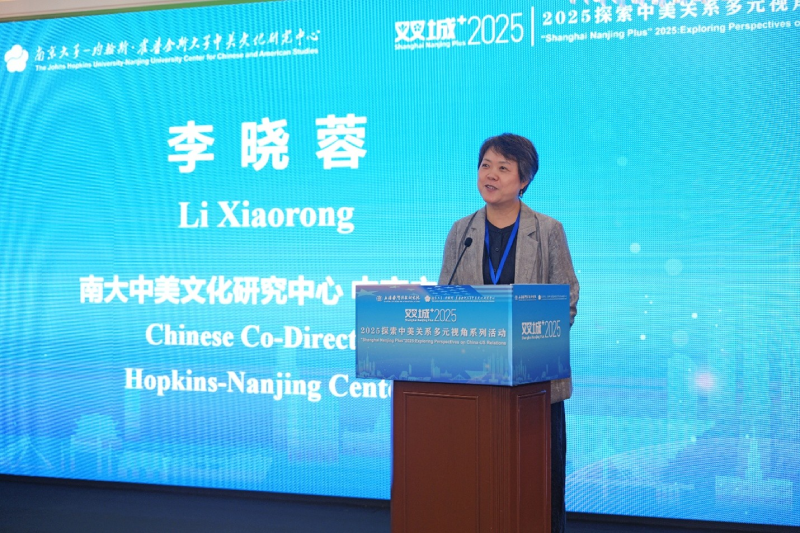
Li Xiaorong, Chinese Co-Director of the Nanjing University–Johns Hopkins University Center for Chinese and American Studies
Chinese Co-Director Li Xiaorong quoted Charles Dickens’ famous opening line from A Tale of Two Cities — “It was the best of times, it was the worst of times” — to capture the profound tensions and complex challenges defining our world today. In such an era, she emphasized, people-to-people exchanges serve as vital bridges of understanding. She highlighted the particular importance of international initiatives like the “Shanghai Nanjing Plus,” which foster mutual understanding and promote cooperation.
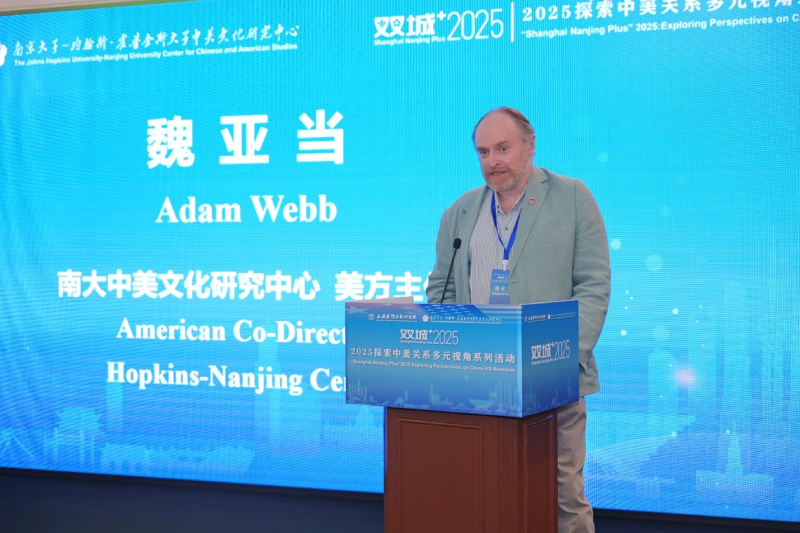
Adam Webb, American Co-Director of the Nanjing University–Johns Hopkins University Center for Chinese and American Studies
American Co-Director Adam Webb reviewed the founding process of the “Shanghai Nanjing Plus” program and noted that it is dedicated to fostering an in-depth exploration of contemporary China. This year’s event focuses on the major technological transformations reshaping today’s world, examining their profound impacts on economic policy, social policy, and talent development. He warmly welcomed all participants to engage actively in the discussions and activities.
This year’s program adopts the theme “Technology Innovation on the Shifting Economic and Policy Landscape” and has invited 20 early- and mid-career professionals from countries including the United States, Italy, the Netherlands, and the United Kingdom. Participants come from a wide range of institutions, such as the U.S. Department of Energy, the National Committee on U.S.–China Relations, the Council on Foreign Relations, the RAND Corporation, the American Enterprise Institute, the World Resources Institute, the Center for Global Development, Rhodium Group, Jane’s Information Group, ING Bank, New York University Shanghai, Rush University (Chicago), University of Jember (Indonesia), the London School of Economics and Political Science, GeoStrategic Analysis Inc., Sibylline Consulting, and Tranquil Healthcare, etc.
Over the coming week, the delegation will conduct an intensive visit to Shanghai, Hefei, and Nanjing, engaging with local legislative bodies y, universities, think tanks, research institutes, media, enterprises, and local community. Through these visits, participants will gain a multidimensional perspective of China and engage in extensive exchanges with representatives from various sectors, jointly exploring the future of China–U.S. relations.