Liu Zongyi Interviewed by South China Morning Post
Liu Zongyi source:South China Morning Post
China and India resumed cross-border trade through the Lipulekh Pass in the Himalayas last week in the latest sign of a cautious rapprochement between the two countries.
The reopening of the pass near the contested India-China-Nepal border after six years came shortly after Chinese Foreign Minister Wang Yi’s visit to New Delhi.
It was described by analysts as a goodwill gesture from Beijing, but they warned that the long-standing border dispute and strategic rivalry would continue to weigh on the relationship between the Asian giants.
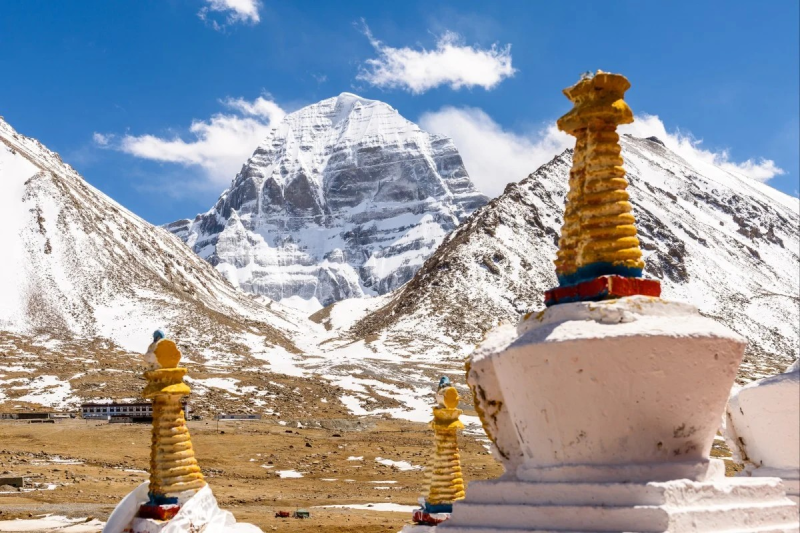
According to the Press Trust of India, the first batch of 26 Indian traders from Uttarakhand crossed into Tibet’s Taklakot market in Purang county, home to the sacred Mount Kailash and Lake Manasarovar in eastern Tibet’s Ngari prefecture, on June 26.
More journeys are planned during the seasonal window that runs through to September.
Wang Dehua, an India specialist at the Shanghai Municipal Centre for International Studies, said the reopening was “a step towards recovery and warming ties” rather than a strategic reset.
“The reopening can be seen as a pragmatic step by China in managing Tibet-related issues,” he said.
“Beyond border trade, it carries symbolic weight as the pass is a vital route for Indian pilgrims travelling to the sacred mountain and lake revered across multiple faiths, including Buddhism, Hinduism and Tibetan Buddhism.
“It contributes to easing the long-standing border dispute, a historical legacy that can only be resolved through negotiation and mutual compromise.”
Lipulekh, at over 5,300 metres (17,400 feet), is one of India’s three designated border trade points with China, alongside Shipki La Pass in Himachal Pradesh and Nathu La Pass in Sikkim, the latter also serving as a key pilgrimage route to Tibet.
All were suspended after the Covid-19 pandemic and the deadly 2020 Galwan Valley clash in eastern Ladakh, which killed 20 Indian and at least four Chinese soldiers.
Both governments agreed last year to reopen these routes, as part of efforts to steady relations following the 2024 meeting between Chinese President Xi Jinping and Indian Prime Minister Narendra Modi at the Brics summit in Kazan, Russia.
Wang Dehua said that despite repeated calls to boost border trade since the early 2000s, progress had been slow, especially since the 2017 Doklam stand-off near the border with Bhutan and the 2020 Galwan clashes.
He linked the current reopening to the Chinese foreign minister’s recent meetings in Delhi with Modi and national security adviser Ajit Doval.
Wang Yi described the two countries as “partners, not rivals”, adding that relations had “gradually … returned to the track of recovery and improvement”.
He also urged both sides “to respect each other’s core interests, properly handle sensitive issues” and prevent the border issue from derailing the wider relationship, saying they should “speed up the resumption of dialogue mechanisms and promote exchanges”.
According to the Chinese ambassador to India Xu Feihong, most of the nearly 50 government-to-government dialogue mechanisms remain stalled, despite recent moves to restore travel links and ease some of India’s investment restrictions.
Liu Zongyi, a senior fellow at the Shanghai Institutes for International Studies, said the Indian side viewed the pilgrimage route as a vote-winner.
“By opening the pass and allowing Indian pilgrims to enter, Beijing has in effect extended significant goodwill to the Modi government,” Liu added.
“Beijing’s aim is to maintain a peaceful and stable border while encouraging cross-border trade and exchanges.”
However, Liu described the gesture as “largely unilateral”, adding it “does not imply China’s recognition of specific territorial claims”.
He added that Wang Yi’s visit and other steps to ease tensions, including Modi’s first visit to China in seven years for last year’s Shanghai Cooperation Organisation summit, may help pave the way for a visit to India by President Xi Jinping for the Brics summit in September.
“The question is whether such goodwill can sustain a long-term thaw,” Liu added.
Liu attributed Delhi’s recent policy shift partly to US President Donald Trump, who has narrowed India’s room to manoeuvre between Washington and Beijing.
“China is willing to offer India some strategic space in hopes of improving ties,” he said. “The key issue, however, is whether India can fundamentally change its perception of China as its greatest threat.”
Wang Dehua also pointed to mixed signals, including Wang Yi’s absence from a Brics meeting in May and Indian ambassador Vikram Doraiswami’s visit to Tibet in June to discuss arrangements for pilgrims.
But he said he was “somewhat pessimistic about the long-term outlook”, citing problems such as India’s opposition to the Medog hydropower project on the Yarlung Tsangpo, the upper course of the Brahmaputra River.
While China’s state-controlled media has praised the Lipulekh reopening as evidence of improving relations, Delhi has adopted a more reserved tone, describing it mainly as the restoration of a historic trade route.
Nepal’s long-standing claim to the Indian-controlled Lipulekh Pass and surrounding areas has added another layer of complexity.
It has recently sent diplomatic notes to both India and China protesting about agreements made without its consultation and has called for any activities in the region to respect its sovereignty.
In May, India’s foreign ministry dismissed the claim as “neither justified nor based on historical facts and evidence” and said reopening the pass was consistent with historical practice.
China has so far avoided taking sides and has urged India and Nepal to resolve the dispute through dialogue.
“[The dispute] remains an issue between the two countries. China’s reopening of the pass does not imply recognition of the area as Indian territory,” Liu said.
“Such disputes must be resolved bilaterally. If mediation or assistance is needed, I think Beijing is willing to play a constructive role.”