How the BNP’s Bangladesh election victory will shape policy trends
Liu Zongyi source:SCMP
On February 12, Bangladesh held its first official general election since the fall of the Sheikh Hasina government. Compared with previous elections marred by violence and turmoil, this one was relatively calm. Although there were scattered allegations of irregularities, international observers generally praised it as one of the most transparent elections in Bangladesh’s history.
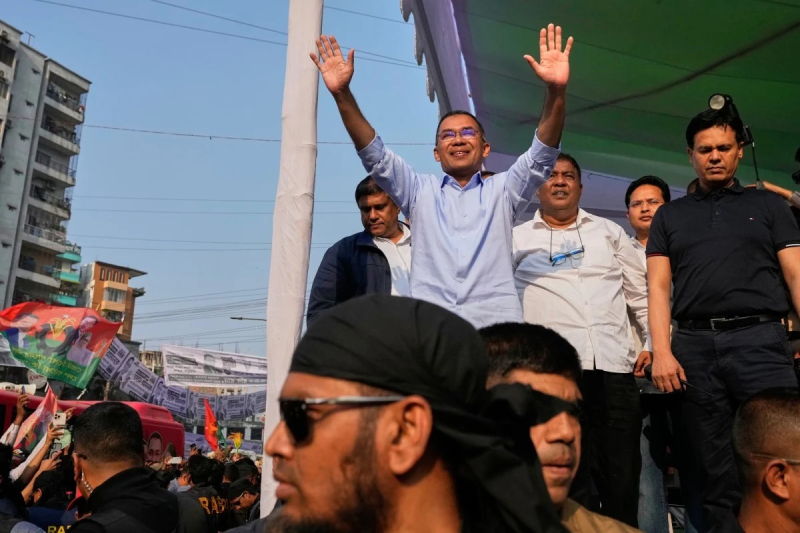
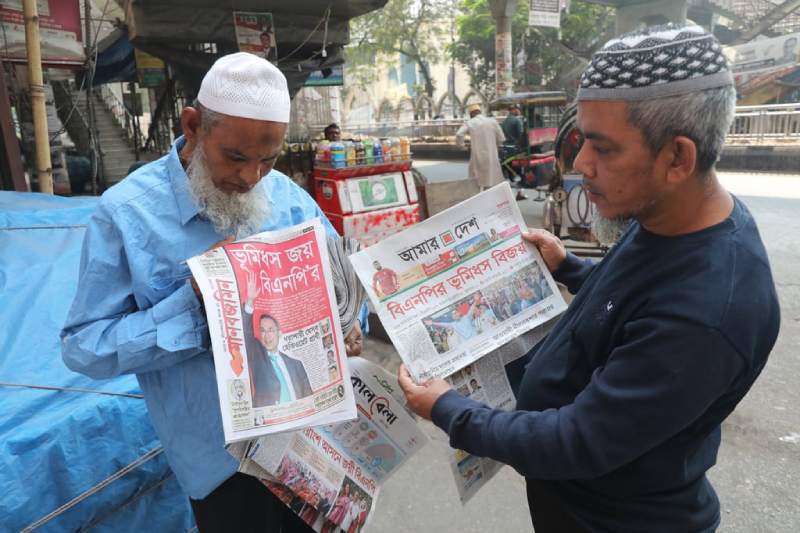
With voter turnout at nearly 60 per cent, the Bangladeshi people showed strong enthusiasm for change through democratic means. The results confirmed a sweeping victory for the Bangladesh Nationalist Party (BNP), whose alliance secured a large parliamentary majority. Jamaat-e-Islami leader Shafiqur Rahman accepted the outcome. BNP leader Tarique Rahman is expected to become prime minister.
The BNP’s win reflects the underlying realities of Bangladesh’s socioeconomic structure. The election also ratified major constitutional reforms via a simultaneous referendum, marking a new phase in the country’s democratic transition.
After the formation of the interim government in August 2024, expectations for reform were high, especially among the youth. However, the government only made limited adjustments in the following year without addressing deeper issues. With Bangladesh set to graduate from “least developed country” status this year, the public had hoped for a brighter future.
Yet under interim rule, the country saw political instability, economic decline, and rising youth unemployment and business costs, all of which hindered growth and preparations for the 2026 transition. Some began to view the interim government as lacking legitimacy and the authority to tackle national problems, with only an elected government able to restore stability and confidence.
With Hasina’s Awami League banned from participating, this election contest centred on the BNP and Jamaat-e-Islami. The National Civic Party (NCP), formed by student activists involved in the 2024 anti-Hasina protests, lost popular support amid student leaders’ weak organisation.
The BNP had clear advantages over Jamaat-e-Islami. First, as part of the old establishment, it retained the backing of most social and economic elites. Despite recent upheavals, Bangladesh remains dominated by urban business families and rural landowners who prioritise stability and growth.
Like the Awami League, the BNP represents their interests and thus drew broad elite support. Even ordinary voters, aware of the allegations of past corruption and nepotism among BNP leaders, saw no better alternative. The military, an influential actor in politics, also favoured the BNP as a stabilising force. During the elections, it helped maintain order. Shortly before voting, joint forces uncovered large amounts of illegal funds tied to Jamaat-e-Islami, further damaging its standing.
Second, the BNP's victory underscored Bangladeshi society's secular orientation. The party, founded by independence hero General Ziaur Rahman, represents a secular tradition,while Jamaat-e-Islami suffers from historical and ideological liabilities: its opposition to independence in 1971, and its strong Islamic ideology restricting women's working hours,music and entertainment, and opposing Sufism.
In its alliance, there are more extreme Islamic parties close to the Taliban in Afghanistan. These views alienate much of Bangladesh's secular population.
Held under international observation and with the margin of victory that large, the results could not be denied by opposition parties even if they complained about fraud. With the army on board,the political situation in Bangladesh is expected to remain stable for some time.
The BNP will form a national consensus government according to its own wishes, while Jamaat-e-Islami and its allies will take opposition roles in parliament. Domestically, BNP's "Vision 2030" manifesto focuses on anti-corruption,social welfare and returning power to the people,though some proposals might be hard to implement.
The BNP government is likely to promote urgent reforms to address issues that pose a serious obstacle to economic development. It seeks to root out corruption, promote economic and social development, attract foreign investment, build infrastructure, create jobs, eliminate youth dissatisfaction and provide subsidies to vulnerable groups. However, because the BNP is part of the old order, the original political, economic and social order is likely to be preserved.
Lacking recent governing experience, the BNP will face challenges in implementing its political platform. Success will depend on whether it can achieve party unity and strengthen discipline,solve the differences over policy direction and power distribution between senior leaders and younger members. and eliminate the association among Bangladeshis of BNP members with mastan - or mafia-style groups - and nepotism.
In foreign policy, the BNP is expected to continue a strategy of balancing major powers such as China,the United States and India. A major challenge,however, is the comprehensive trade agreementthe interim government signed with the US shortly before the election.
This appears to place Bangladesh's defence,energy, trade and digital infrastructure under US influence and restrict cooperation with China,Russia and others, with punitive tariffs fornon compliance. The deal could endanger Bangladesh's sovereignty and economic security,and how the BNP manages it will be a key early test.
BNP leaders have expressed a desire for friendly ties with India. Indian Foreign Minister S. Jaishankar attended the funeral of former BNP leader Khaleda Zia and met Tarique Rahman, conveying Prime Minister Narendra Modi's condolences and calling for "a new beginning" in bilateral relations. However, strong anti-India sentiment in Bangladesh will make major policy shifts difficult unless New Delhi takes meaningful steps on issues such as cross-border river water sharing and the extradition of Hasina.