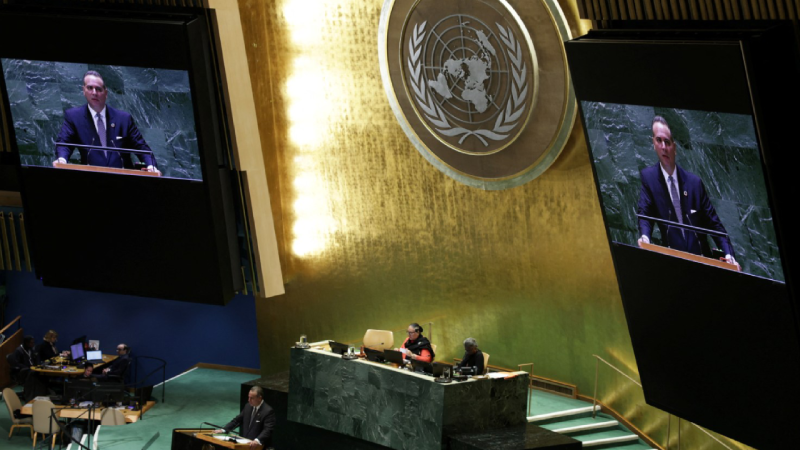
Chen Dongxiao Interviewed by Council on Foreign Relations
Chen Dongxiao source:美国外交关系协会(CFR)
In September, the United Nations will convene its eightieth General Assembly in New York. While hot topics such as artificial intelligence and the conflicts in Ukraine and the Gaza Strip are sure to dominate the conversation, the upcoming selection of a new UN secretary-general will also be top of mind. The organization celebrates its eightieth year as the world enters a new era of great power competition and increasing conflict. It is worth asking if the United Nations, in its current form, is up to the challenge.
Fifteen Council of Councils members discuss the reform, restructuring, and leadership the institution needs in order to navigate this new era and remain the principal forum for resolving issues of global governance.This article presents selected insights from our experts.
Mitigate P5 Stalemate and Great Power Rivalries
The Future of Multilateralism Needs a Bold Leader
As the United Nations nears its eightieth anniversary, it faces a convergence of crises that threaten its effectiveness and relevance. Big power rivalries have paralyzed the Security Council, turning it into a stage for vetoes and posturing rather than collective security.
Meanwhile, the United Nations’ outdated structure fails to reflect the growing influence of emerging economies, and inefficiency hampers its ability to tackle today’s challenges, such as climate change and the risks posed by artificial intelligence. The organization faces a $2.4 billion funding gap in 2025 alone. That financial instability further undermines its operations while the Sustainable Development Goals remain off track, with over a third stagnating or regressing.
To overcome those challenges, the next UN secretary-general should embody exceptional qualities that go beyond traditional leadership. First and foremost, they should be a skilled diplomat with the ability to mediate between big powers and de-escalate tensions. The world needs a leader who can act as a brake on fragmentation, fostering dialogue and cooperation even in an era of heightened geopolitical rivalry.
Equally important is a deep commitment to serving humanity. The next leader of the United Nations should amplify the voices of marginalized countries and communities, ensuring that the institution remains a platform for inclusion and equity. That requires moral courage and a global perspective that transcends individual national interests.
Creativity and vision are also essential. The next secretary-general should chart a bold path for reform, particularly in aligning the United Nations with the goals set forth in the Pact for the Future. That involves rethinking how the institution operates and ensuring that its knowledge products are practical and actionable for member states, particularly in the Global South.
Finally, managerial excellence is paramount. The secretary-general should streamline UN bureaucracy, reduce inefficiencies, and champion accountability. Publishing value-for-money metrics, consolidating overlapping offices, and empowering leaders from the Global South are key steps toward making the United Nations a more dynamic and effective organization.
In an age of crisis for multilateralism and big power competition, neutrality cannot mean passivity. The next UN secretary-general needs to be an active steward that bridges divides and unites efforts. They should not merely lead the United Nations, but transform it into a faster, fairer, and more inclusive institution for all.