Restraint, not rhetoric for regional stability
Sk Tawfique M Haque 来源:NEWAGE
SINCE the mid-20th century, the One China Policy has stood as a foundational pillar of Asian and global diplomacy. At its core, the policy reflects a widely accepted diplomatic stance that there is only one sovereign ‘China’, represented by the People’s Republic of China, and that Taiwan is part of that single China — a position that most states agree to and adopt. Bangladesh has been a consistent adherent of this policy since establishing diplomatic ties with China, viewing it as integral to its sovereignty-respecting foreign policy and longstanding bilateral cooperation with Beijing.
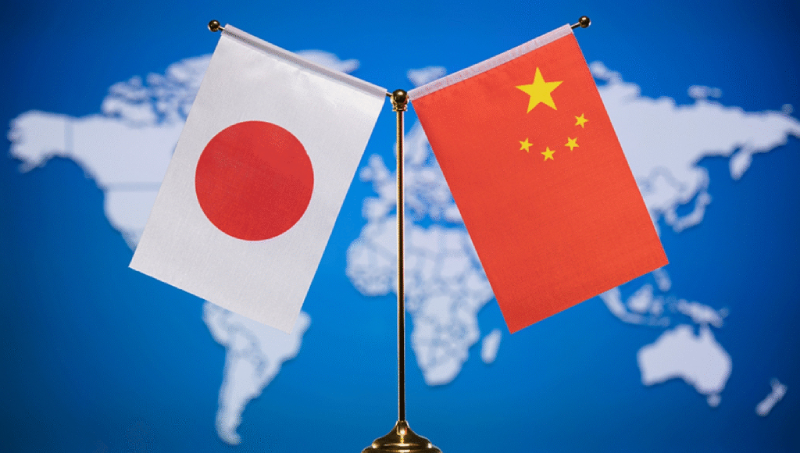
However, recent comments by Japan’s prime minister on Taiwan represent a surprising departure from Tokyo’s traditional ambiguity, injecting fresh turbulence into a geopolitical equilibrium that many middle powers have relied on. These developments underscore a growing tension: when major powers recalibrate their stance, smaller and emerging states alike are left to absorb the diplomatic shockwaves and to recalibrate their own strategies to navigate increasingly strained regional currents.
Significantly, these remarks have not only drawn strong objections from Beijing but have also sparked criticism within Japan itself, including protests by citizens, warnings from former prime ministers, and concern among Japanese scholars who argue that such rhetoric undermines Japan’s pacifist commitments and risks regional instability. While Tokyo debates its strategic recalibration, countries like Bangladesh are placed in an increasingly awkward position: maintaining deep and productive relations with both Japan and China while being indirectly pressured by great-power signalling that offers them no security dividend. When major powers test new geopolitical postures through rhetoric and proxy alignment, it is middle and smaller states that are left to absorb the diplomatic aftershocks.
Bangladesh’s relations with both China and Japan are broad, deep, and—crucially—complementary rather than competitive, reflecting Dhaka’s longstanding preference for diversified partnerships over zero-sum alignments. China has emerged as one of Bangladesh’s largest trading partners and a significant source of infrastructure financing, playing a pivotal role in connectivity, energy, and industrial capacity through projects that support Bangladesh’s development and export ambitions. Japan, meanwhile, remains one of Bangladesh’s largest development partners, anchoring its engagement in high-quality official development assistance, human-capital development, urban transport, and institutional capacity-building. Tokyo’s emphasis on governance standards, technology transfer, and long-term sustainability complements Beijing’s scale, speed, and manufacturing-orientated investments. For Bangladesh, these partnerships do not represent strategic choices between rivals but parallel tracks that address different developmental needs, reinforcing economic resilience and policy autonomy. There is no possibility of framing Bangladesh’s engagement with China and Japan as a geopolitical trade-off that misunderstands both the nature of these relationships and Dhaka’s core interest: pragmatic cooperation that advances national development without importing great-power rivalries.
Japan’s post-World War II foreign policy was long defined by strategic restraint and careful balancing between great-power dynamics in East Asia. After its 1945 defeat, Tokyo adopted a pacifist constitution, focused on economic reconstruction, and relied on the US for security while pursuing cautious diplomacy with Beijing. For decades, Tokyo maintained a calibrated position on the Taiwan issue, stopping short of legally endorsing Beijing’s territorial claim to Taiwan and instead expressing that it ‘understands and respects’ China’s position.
The recent comments by Japan’s prime minister on Taiwan represent a break from diplomatic minimalism into geopolitical signalling. By suggesting that a ‘Taiwan contingency’ that threatened Japan’s security could justify collective self-defence, Tokyo has gone beyond its traditionally muted language and entered territory more commonly associated with alliance deterrence than diplomatic hedging. Rather than a casual remark, this is a signal embedded in the broader US–Japan security alignment, which has deepened over recent years through revised defence guidelines and shared concerns about China’s military modernisation. From Washington’s perspective, encouraging allied voices like Tokyo’s to articulate closer linkages between their national security and the Taiwan Strait is part of a broader strategy to test deterrence against Beijing by widening the chorus of concern among its partners. What makes this distinct — and geopolitically consequential — is that it reframes the Taiwan question less as an internal issue between Taipei and Beijing and more as a regional red line that could implicate US allies in scenarios previously avoided by Japan’s cautious diplomacy.
From the perspective of the Global South, Japan’s rhetorical shift on Taiwan is deeply unwelcome because it exemplifies how major powers increasingly rely on proxy signalling to advance strategic agendas while externalising risk onto third countries that neither seek nor benefit from escalation. When allied states are encouraged to harden language or redraw security linkages, the strategic costs — diplomatic pressure, economic retaliation, and regional instability — are disproportionately borne by developing countries that lack the capacity or desire to absorb such shocks. Escalation narratives may strengthen deterrence calculations for great powers, but they simultaneously narrow diplomatic space for smaller states by forcing alignment choices that undermine their autonomy and longstanding balancing strategies. For much of East Asia’s post-war history, it was deliberate ambiguity, not overt confrontation, that preserved peace across the Taiwan Strait and beyond — allowing economic interdependence and dialogue to flourish even amid unresolved disputes. Replacing that ambiguity with alliance-driven signalling risks transforming managed tensions into self-fulfilling crises, leaving the Global South to navigate instability it did not create and cannot control.
Bangladesh and others alike today find themselves, somewhat unexpectedly, navigating new strategic currents, shaped not by their own policy shifts but by evolving dynamics among the larger powers. As regional discourse becomes more polarised, countries like Bangladesh may face growing expectations to interpret or react to signals that were previously unnecessary. This introduces a degree of uncertainty and potential concern, not because Bangladesh’s partnerships are in question, but because shifting narratives can complicate the careful balance that many developing states have successfully maintained. For Bangladesh, the priority remains clear: sustaining cooperative, mutually beneficial relations with all partners without being drawn into strategic anxieties originating elsewhere that do little to advance national or regional stability.
There is a growing risk in normalising alliance-led provocation under the banner of ‘values-based’ geopolitics, where rhetorical commitments are amplified without corresponding accountability for the consequences they generate. When major powers rely on allies to advance confrontational agendas — whether through strategic signalling, hardened language, or implied red lines — they diffuse responsibility while widening the circle of potential fallout. Such practices steadily erode traditions of ASEAN-style consensus diplomacy, which have long privileged restraint, dialogue, and incremental confidence-building over declaratory brinkmanship. They also undermine the spirit of non-alignment and strategic autonomy that many developing states have cultivated to safeguard their sovereignty in an increasingly polarised world. Smaller and middle powers should not be expected to underwrite great-power experiments in deterrence, primarily when the risks — economic disruption, diplomatic pressure, and regional instability — are borne locally, while the strategic gains accrue elsewhere. Preserving regional peace requires resisting the quiet normalisation of proxy confrontation and reaffirming diplomacy that values stability over spectacle.
Ultimately, Asia’s relative peace has never been sustained by rhetorical escalation dressed up as principle, but by restraint and the patient management of differences. Preserving that legacy matters not only to the major powers but also to the many smaller states whose prosperity and security depend on a region governed by stability. Unlike a more rigid, binary notion of friendship that assumes exclusivity, many Asian societies are culturally attuned to maintaining multiple close friendships simultaneously — valuing harmony, coexistence, and balance over the pressure to choose sides.
Bangladesh’s continued support for the One China Policy should be understood not as a gesture of alignment, but as a stabilising and sovereignty-respecting position rooted in consistency, international law, and regional prudence. For countries like Bangladesh, adherence to this framework has long provided diplomatic clarity while allowing space for constructive engagement across Asia. At a moment of heightened geopolitical signalling, Japan — respected across the region for its post-war pacifism, development leadership, and diplomatic credibility — is uniquely positioned to act as a bridge power, helping to lower tensions rather than amplify them. Such a role would better reflect Japan’s historical strengths and its enduring contributions to Asian stability.